Spicy Moroccan Fish-Flavorful Rich Sauce Recipe
Classic Spicy Moroccan Fish in Rich Sauce is more than just a meal; it’s an aromatic journey that transports your senses straight to the bustling souks of Marrakech. Have you ever craved a dish that’s both deeply flavorful and surprisingly simple to prepare? That’s precisely the magic held within this incredible recipe. It’s a beloved choice for so many because of its vibrant, complex flavors – a beautiful dance of sweet, savory, and of course, that delightful kick of spice. What truly sets this dish apart is the harmonious blend of fresh, tender fish bathed in a luxuriously thick, tomato-based sauce infused with a symphony of Moroccan spices like cumin, coriander, paprika, and a hint of cinnamon. It’s comforting yet exotic, familiar yet utterly exciting, making our Classic Spicy Moroccan Fish in Rich Sauce a true showstopper for any occasion.
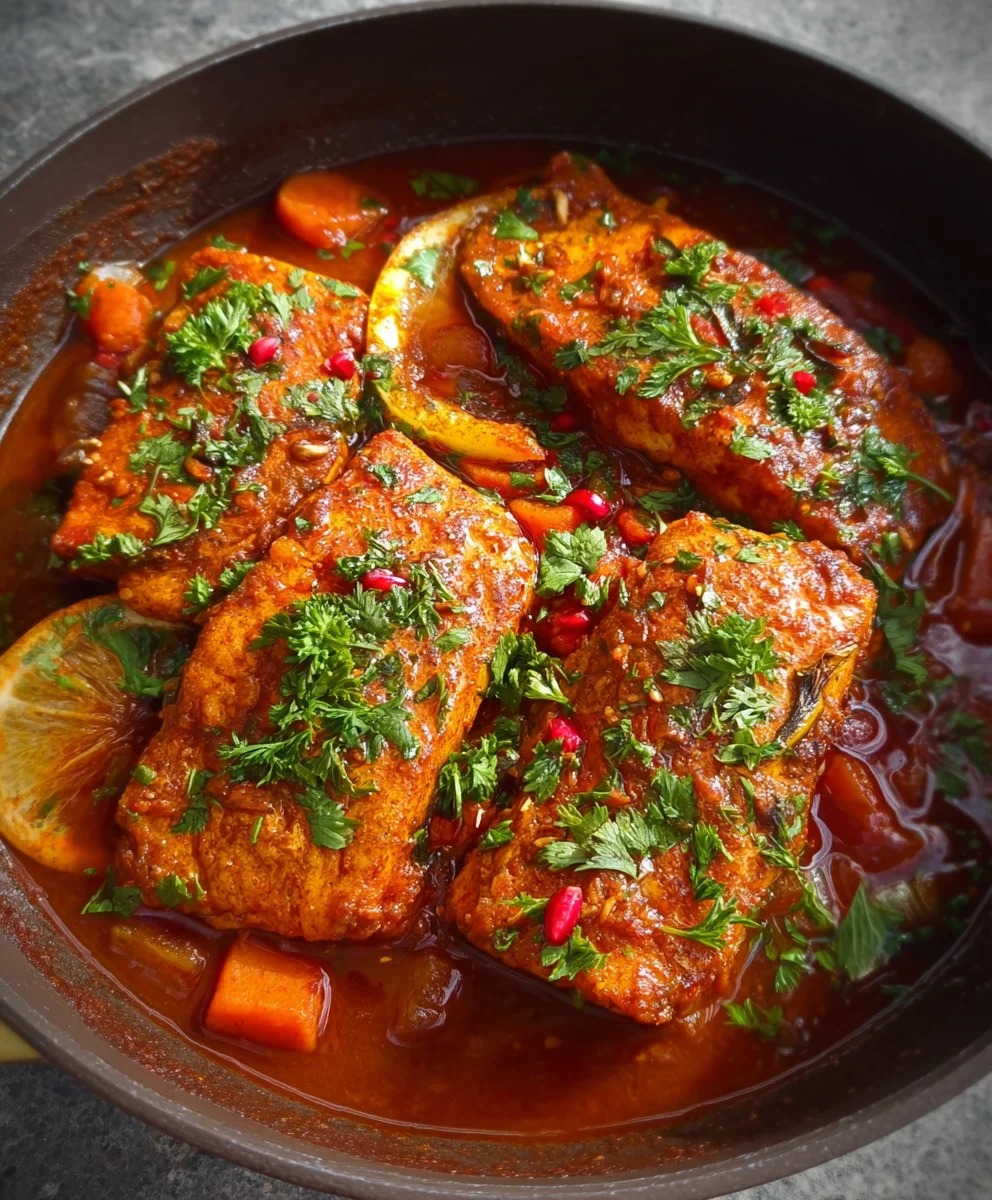
Ingredients:
- 1 pound/450g salmon fillets (skin on or off, your preference)
- ⅓ cup olive oil
- 1 red bell pepper, sliced into strips
- 1 serrano pepper (or 2 jalapeno peppers), sliced into strips
- ½ cup chopped fresh cilantro
- 2 carrots, peeled and cut into 2-inch long, thin strips (julienned)
- 1 russet potato, peeled and cut into 1-inch thick slices (optional, but adds a lovely starchy element)
- 6 garlic cloves, peeled and halved
- 1 tablespoon tomato paste
- ¾ to 1 cup water (start with ¾ cup and add more if needed)
- 1 tablespoon sweet paprika
- ½ tablespoon hot paprika (feel free to adjust this up or down depending on how much heat you enjoy)
- 1 teaspoon coarse salt
- ½ teaspoon ground cumin
- ¼ teaspoon ground turmeric
Preparing the Flavors and Vegetables
Step 1: Building the Aromatic Base
Begin extract by heating the olive oil in a large, heavy-bottomed pot or a Dutch oven over medium heat. Once the oil is shimmering, add the halved garlic cloves and the sliced serrano or jalapeno peppers. Sauté these for about 2 to 3 minutes, stirring frequently, until they become fragrant and the garlic is lightly golden. Be careful not to burn the garlic, as this can impart a bitter taste. The peppers will start to soften and release their spicy aroma into the oil, forming the initial layer of flavor for our sauce.
Step 2: Adding the Vegetables and Spices
Next, add the julienned carrots and the optional potato slices to the pot. Stir them around in the fragrant oil for about 5 minutes, allowing them to soften slightly and absorb some of the initial flavors. Now, it’s time to introduce the spices. Sprinkle in the sweet paprika, hot paprika, coarse salt, cumin, and turmeric. Stir everything well to coat the vegetables evenly with the spices. Cook for another minute or two, allowing the spices to bloom in the hot oil, which intensifies their aromas and flavors. You’ll notice a wonderful, earthy, and slightly smoky scent filling your kitchen at this stage.
Step 3: Creating the Rich Sauce Base
Incorporate the tomato paste into the vegetable and spice mixture. Stir it vigorously for about 1 minute, allowing it to toast slightly and deepen in color. This step helps to remove any raw taste from the tomato paste and adds a concentrated layer of umami. Pour in ¾ cup of water and stir to combine everything, scraping up any bits that may have stuck to the bottom of the pot. Bring this mixture to a gentle simmer. If the sauce seems too thick at this point, you can add the remaining ¼ cup of water, or a little more, to reach your desired consistency. The sauce should be rich but not overly watery.
Incorporating the Fish and Finishing Touches
Step 4: Gently Simmering the Fish
Now it’s time to add the star of our dish: the salmon fillets. Carefully arrange the salmon fillets on top of the simmering vegetable and sauce mixture. Try to distribute them evenly so they cook through. Reduce the heat to low, cover the pot tightly with a lid, and let the salmon gently poach in the sauce for about 10 to 15 minutes. The exact cooking time will depend on the thickness of your salmon fillets. You’ll know they’re done when the salmon flakes easily with a fork and has turned opaque throughout. Avoid overcooking, as salmon can become dry.
Step 5: The Final Flourish of Freshness
Once the salmon is cooked through, remove the pot from the heat. Sprinkle the entire dish generously with the chopped fresh cilantro. The warmth of the dish will wilt the cilantro slightly, releasing its bright, herbaceous aroma and adding a vibrant finish. Let the dish rest, covered, for about 5 minutes before serving. This resting period allows the flavors to meld together beautifully and ensures the salmon remains moist and tender. You can serve this Classic Spicy Moroccan Fish directly from the pot, making for a beautiful presentation.
Conclusion:
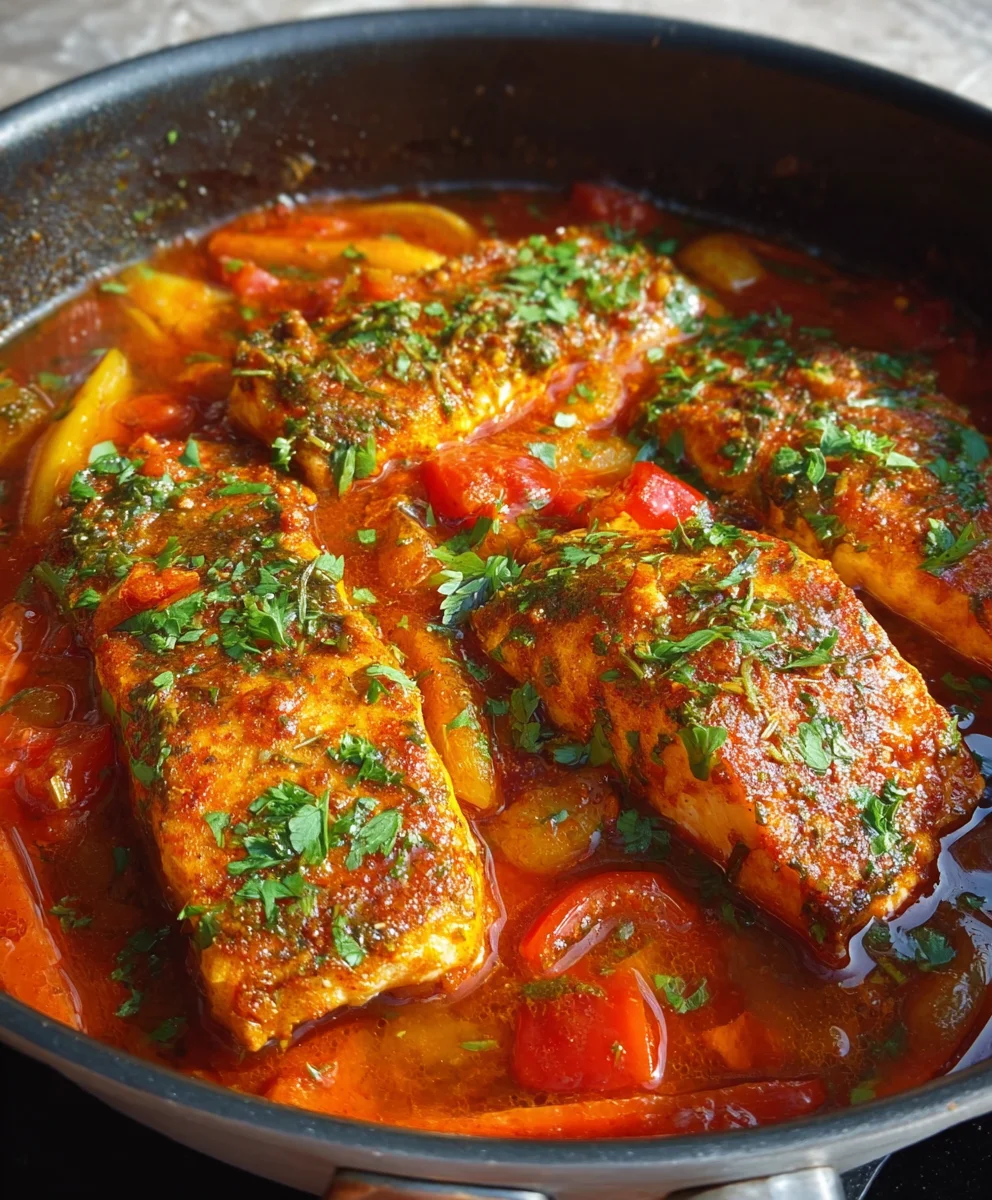
I hope you’ve enjoyed learning how to create this incredibly flavorful Classic Spicy Moroccan Fish in Rich Sauce. This dish is a true celebration of vibrant spices and tender, flaky fish, creating a meal that’s both comforting and exciting. The balance of heat from the chili, warmth from the cumin and coriander, and the slight tang from preserved lemon makes every bite a delight. It’s a fantastic way to bring a taste of Morocco right into your kitchen, perfect for a weeknight dinner or impressing guests.
For serving, I highly recommend pairing your Classic Spicy Moroccan Fish in Rich Sauce with fluffy couscous to soak up all that delicious sauce. A simple side of steamed green beans or a fresh, crisp salad with a light vinaigrette would also be lovely complements.
Don’t be afraid to experiment with variations! You could try different types of white fish like cod, haddock, or sea bass. For a vegetarian twist, consider using firm tofu or chickpeas instead of fish. You can also adjust the spice level to your preference by adding more or less chili.
Give this Classic Spicy Moroccan Fish in Rich Sauce a try – I’m confident you’ll fall in love with its rich, aromatic flavors. Happy cooking!
Frequently Asked Questions:
What kind of fish is best for this recipe?
While many firm white fish work well, I find that sea bream, sea bass, or even cod hold up beautifully in the rich sauce without falling apart. The key is to use fish that won’t crum extractble too easily.
How can I make the sauce less spicy?
If you’re sensitive to spice, you can easily reduce the heat. Omit the fresh chili altogether, or use just a tiny pinch of red pepper flakes. You can also add a touch of honey or a small spoonful of sugar to the sauce to balance out the spiciness.
Spicy Moroccan Fish-Flavorful Rich Sauce Recipe
A flavorful and rich Moroccan-inspired fish dish with a spicy, aromatic sauce, featuring tender salmon poached in a vibrant vegetable and spice blend.
Ingredients
-
1 pound/450g salmon fillets
-
⅓ cup olive oil
-
1 red bell pepper, sliced into strips
-
1 serrano pepper, sliced into strips
-
½ cup chopped fresh cilantro
-
2 carrots, peeled and cut into strips
-
1 russet potato, peeled and cut into 1-inch thick slices (optional)
-
6 garlic cloves, peeled and halved
-
1 tablespoon tomato paste
-
¾ to 1 cup water
-
1 tablespoon sweet paprika
-
½ tablespoon hot paprika
-
1 teaspoon coarse salt
-
½ teaspoon ground cumin
-
¼ teaspoon ground turmeric
Instructions
-
Step 1
Heat olive oil in a large pot or Dutch oven over medium heat. Add garlic cloves and sliced serrano peppers. Sauté for 2-3 minutes until fragrant and garlic is lightly golden. -
Step 2
Add julienned carrots and optional potato slices. Stir for 5 minutes. Add sweet paprika, hot paprika, coarse salt, cumin, and turmeric. Stir to coat vegetables and cook for 1-2 minutes. -
Step 3
Incorporate tomato paste and stir for 1 minute. Pour in ¾ cup water, stir to combine, and bring to a gentle simmer. Add more water if needed to reach desired sauce consistency. -
Step 4
Arrange salmon fillets on top of the simmering sauce. Reduce heat to low, cover, and poach for 10-15 minutes, or until salmon flakes easily and is opaque. -
Step 5
Remove from heat and sprinkle generously with chopped cilantro. Let rest, covered, for 5 minutes before serving.
Important Information
Nutrition Facts (Per Serving)
It is important to consider this information as approximate and not to use it as definitive health advice.
Allergy Information
Please check ingredients for potential allergens and consult a health professional if in doubt.