Spicy Tuna Kimbap Quick Easy Recipe
Easy 15-min. Spicy Tuna Kimbap is about to become your new weeknight hero! Are you tired of spending hours in the kitchen after a long day, or are you looking for a quick and flavorful lunch that’s leagues beyond your average sandwich? Then you’ve come to the right place. This delicious Korean rice roll, often called kimbap, is incredibly versatile and satisfying. What truly sets this easy 15-min. spicy tuna kimbap apart is the delightful fusion of textures and tastes: the chewy seasoned rice, the crisp vegetables, and the zesty, slightly fiery kick from the spicy tuna filling. It’s no wonder kimbap is a beloved staple, perfect for picnics, packed lunches, or a simple, healthy dinner on the go. Get ready to whip up a batch of pure goodness in under 15 minutes!
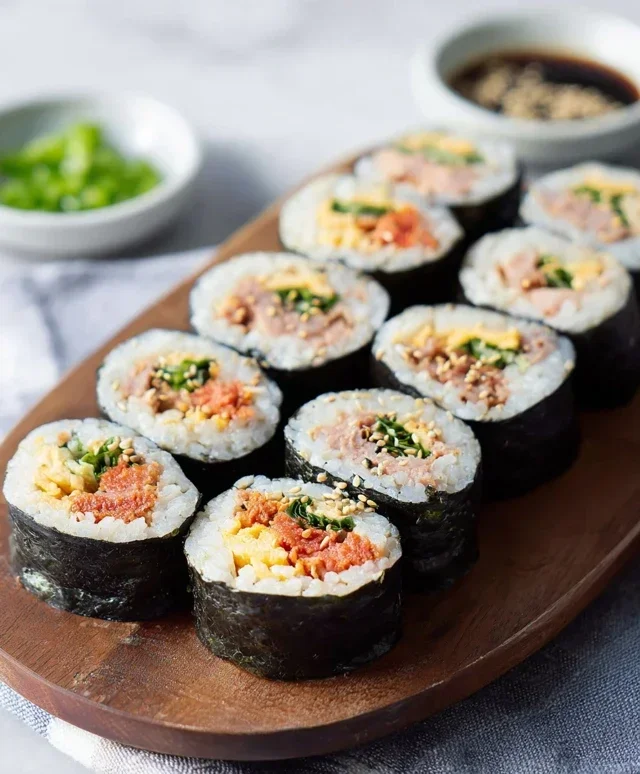
Easy 15-Min. Spicy Tuna Kimbap
Who says you need hours in the kitchen to create something delicious and impressive? Today, we’re diving into the world of Korean comfort food with a quick and vibrant dish: Easy 15-Minute Spicy Tuna Kimbap! This recipe is your weeknight savior, a perfect lunchbox addition, or a fantastic appetizer that comes together in a flash. Kimbap, often called Korean sushi rolls, are typically filled with a variety of seasoned vegetables and proteins, rolled in seasoned rice and seaweed. Our spicy tuna version takes this classic and gives it a fiery, flavorful kick that’s utterly addictive. The beauty of kimbap is its versatility, but this spicy tuna filling is a crowd-pleaser that requires minimal fuss. Forget complicated preparations; this recipe is all about speed, simplicity, and fantastic taste. Let’s get rolling!
Ingredients:
Preparing the Rice
The foundation of any good kimbap is perfectly seasoned rice. It’s crucial to use short-grain rice, as it has a sticky texture that holds everything together beautifully. Start by ensuring your rice is hot. In a medium bowl, combine the hot cooked rice with 1 teaspoon of sesame oil, 1 teaspoon of sesame seeds, and 1 teaspoon of salt. Gently fold these ingredients into the rice using a rice paddle or a spatula. Be careful not to mash the rice; we want individual grains to remain intact. The sesame oil adds a lovely nutty aroma and a subtle sheen, while the salt enhances the overall flavor. The sesame seeds provide a slight textural contrast and another layer of nutty goodness. Mix until everything is evenly distributed. Let the seasoned rice sit for a moment to absorb the flavors.
Making the Spicy Tuna Filling
Now for the star of the show: the spicy tuna filling! This is where we inject all that wonderful flavor and heat. Open your can of tuna and drain it thoroughly. If you’re using tuna packed in oil, make sure to press out as much excess oil as possible to avoid making the filling too greasy. Place the drained tuna in a separate bowl. Add the finely chopped green onion, which will provide a fresh, pungent contrast to the richness of the tuna. Next, dollop in the Japanese mayonnaise. Japanese mayonnaise, or Kewpie, is known for its richer, tangier flavor due to the use of egg yolks and rice vinegar. If you don’t have Kewpie, regular mayonnaise will work, but you might want to add a tiny squeeze of lemon juice to compensate for the missing tang. Finally, it’s time for the sriracha. Add 1 tablespoon to start, then taste and add more if you prefer a spicier kick. If you’re a fan of Korean flavors, gochujang (Korean chili paste) is an excellent substitute and will give the filling a slightly different, but equally delicious, depth of flavor. Mix all these ingredients together until well combined and the tuna is evenly coated. The filling should be moist but not soupy.
Assembling the Kimbap Rolls
This is where the magic happens! You’ll need a clean, flat surface to work on. Lay one sheet of nori shiny-side down on your work surface. If you have a bamboo rolling mat, you can place the nori on top of it, which will make rolling much easier. Spread about half of the seasoned rice evenly over the nori sheet, leaving about a 1-inch border at the top edge. This border will help seal the roll. Don’t press the rice down too firmly; a light, even layer is best. Next, arrange two perilla leaves horizontally across the rice, covering about two-thirds of the rice surface. The perilla leaves add a unique, slightly peppery, herbal note that complements the spicy tuna wonderfully. If you don’t have perilla leaves, a layer of crisp green leaf lettuce will also work as a substitute.
Rolling and Sealing
Now, carefully spoon half of the spicy tuna filling in a horizontal line over the perilla leaves, roughly in the center of the rice. Try to keep the filling relatively compact to make rolling easier. Begin extract rolling from the edge closest to you. Use your fingers to hold the filling in place while you lift the edge of the nori and the bamboo mat (if using) and roll it tightly over the filling. Continue rolling, applying gentle, even pressure to create a compact cylinder. As you roll, tuck in the edges to create a neat roll. Once you reach the end of the nori sheet, use a little bit of water to moisten the exposed nori border; this will act as glue to seal the roll. Press the seam gently to ensure it holds. Repeat the entire process with the remaining ingredients for the second roll.
Finishing Touches and Serving
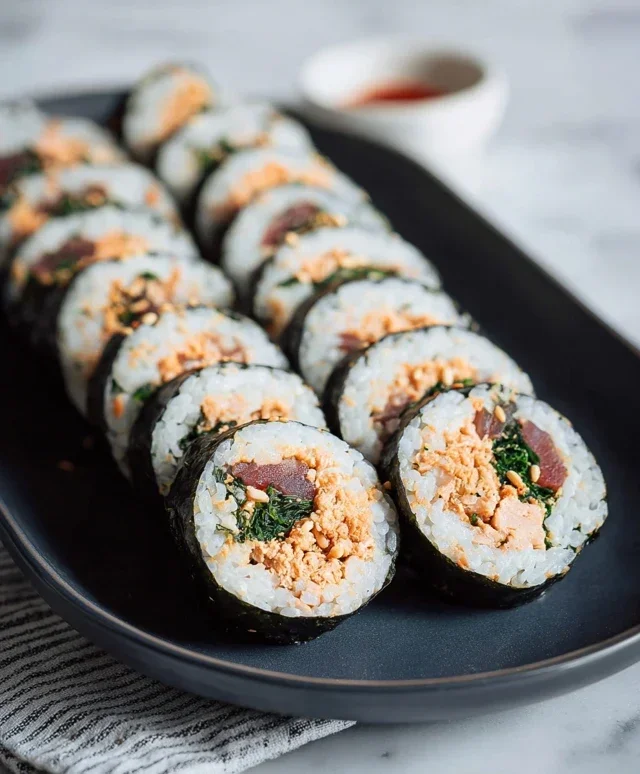
Once your kimbap rolls are assembled and senon-alcoholic aled, it’s time for the final flourish. Lightly brush the tops of the rolls with the remaining 1/2 teaspoon of sesame oil. This adds a beautiful shine and an extra layer of sesame aroma. Then, sprinkle the tops with the remaining 1/2 teaspoon of sesame seeds for a decorative touch and a little crunch. Now, using a sharp knife, cut each roll into 6-8 bite-sized pieces. It’s helpful to wipe your knife with a damp cloth between cuts to prevent the rice from sticking and ensure clean slices. Arrange your beautiful, spicy tuna kimbap on a serving platter. Serve immediately and enjoy the explosion of flavors and textures. This dish is fantastic on its own, or you can serve it with a side of soy sauce for dipping, although the filling is flavorful enough to stand alone. Enjoy your quick, delicious, and satisfying homemade spicy tuna kimbap!
Conclusion:
And there you have it – a delicious and incredibly easy 15-min. Spicy Tuna Kimbap that’s perfect for a quick lunch, a satisfying snack, or even a light dinner! The beauty of this recipe lies in its speed and simplicity, proving that you don’t need hours in the kitchen to create something truly flavourful and visually appealing. The spicy kick from the tuna combined with the fresh crunch of vegetables and the savoury rice wrapped in nori creates a delightful explosion of textures and tastes in every bite. It’s a fantastic way to get a healthy dose of protein and vegetables in a fun and portable format.
I highly recommend serving your Easy 15-min. Spicy Tuna Kimbap with a side of kimchi for an extra flavour punch, or a simple soy sauce and wasabi dip for those who prefer a more traditional accompaniment. Don’t be afraid to get creative with your fillings! You can easily swap out the cucumber and carrot for pickled radishes (danmuji), spinach, or even add some cooked mushrooms. This recipe is a wonderful base for your own kimbap creations.
So, I encourage you to give this recipe a try. You might be surprised at how quickly you can whip up this tasty dish and how much you enjoy it. It’s a real crowd-pleaser and a fantastic introduction to making your own kimbap!
Frequently Asked Questions:
Can I make the spicy tuna filling ahead of time?
Absolutely! You can prepare the spicy tuna mixture a day in advance and store it in an airtight container in the refrigerator. This will save you even more time when you’re ready to assemble your kimbap. Just give it a quick stir before using.
What if I don’t like spicy food?
No problem at all! You can easily adjust the spiciness by reducing or omitting the sriracha or gochujang in the tuna mixture. You can also opt for a regular canned tuna and season it with mayonnaise, soy sauce, and a touch of sesame oil for a milder flavour.
What kind of rice is best for kimbap?
Short-grain sushi rice is ideal for kimbap as it has a sticky texture that holds its shape well and allows for easy rolling. Make sure to cook it according to package instructions and season it with rice vinegar, sugar, and salt while it’s still warm.
Easy 15-min. Spicy Tuna Kimbap
Quick and flavorful Korean rice rolls filled with spicy tuna, perilla leaves, and fresh vegetables, ready in just 15 minutes.
Ingredients
-
2 sheets nori (or gim (dry roasted seaweed))
-
4 perilla leaves (washed & dried with stems trimmed (or sub with green leaf lettuce))
-
1/2 tsp sesame oil (to season kimbap)
-
1/2 tsp sesame seeds (to garnish kimbap)
-
2 cups cooked short grain rice (hot)
-
1 tsp sesame oil
-
1 tsp sesame seeds
-
1 tsp salt
-
5.3 oz canned tuna in oil (or canned tuna in water)
-
2 tbsp green onion (very finely chopped)
-
2 tbsp Japanese mayo (aka Kewpie mayo (or regular mayo))
-
1-2 tbsp sriracha (depending on your spice tolerance (or sub with gochujang))
Instructions
-
Step 1
In a bowl, flake the canned tuna and mix with green onion, Japanese mayo, and sriracha. Stir to combine. -
Step 2
In another bowl, season the hot cooked rice with 1 tsp sesame oil, 1 tsp sesame seeds, and 1 tsp salt. Mix well. -
Step 3
Place a sheet of nori shiny-side down on a bamboo rolling mat. Spread a thin, even layer of seasoned rice over about 2/3 of the nori, leaving the top edge clear. -
Step 4
Layer the perilla leaves over the rice, then spoon the spicy tuna mixture along the bottom edge of the rice. -
Step 5
Tightly roll the kimbap from the bottom up, using the bamboo mat to shape it. Moisten the top edge of the nori with a little water to seal. -
Step 6
Repeat with the second sheet of nori and remaining ingredients. Brush the outside of the rolled kimbap with 1/2 tsp sesame oil and sprinkle with 1/2 tsp sesame seeds. -
Step 7
Slice the kimbap into bite-sized pieces with a sharp knife.
Important Information
Nutrition Facts (Per Serving)
It is important to consider this information as approximate and not to use it as definitive health advice.
Allergy Information
Please check ingredients for potential allergens and consult a health professional if in doubt.